Case Studies
Explore additional municipal and organizational website projects where we enhanced navigation, content clarity, and user experience through strategic content structuring and usability improvements.
Property History & Zoning Records System
- Designed and organized a searchable zoning records system that transformed more than 25 years of fragmented property history into a structured, accessible resource. The project connected zoning decisions directly to individual parcels using organized records, OCR searchability, and GIS-integrated access.
Website Consolidation & Content Architecture
- Combined two independent organizational websites into a unified content system with shared navigation, reduced duplication, and connected user pathways. The project improved usability while maintaining distinct organizational identities within a single scalable structure.
Website Structure & Navigation Systems
- Redesigned website navigation and content organization to improve clarity, reduce user effort, and streamline access to important information. Focused on logical hierarchy, usability, and scalable content structures across desktop and mobile experiences.
Documentation & Workflow Design
SEO Content & Information Strategy
Streamlining Two Websites into
One Unified System
Website Consolidation & Content Architecture
The Problem
- Two separate websites with independent structures
- Limited cross-navigation required users to leave one site to access the other
- Users often had to restart their search when switching between sites
- Content duplicated across both platforms
- Inconsistent user experience depending on entry point
- Overlap between the organizations created confusion about where information was located
CONTEXT
Two related organizations maintained separate websites with overlapping users and no connection between them.
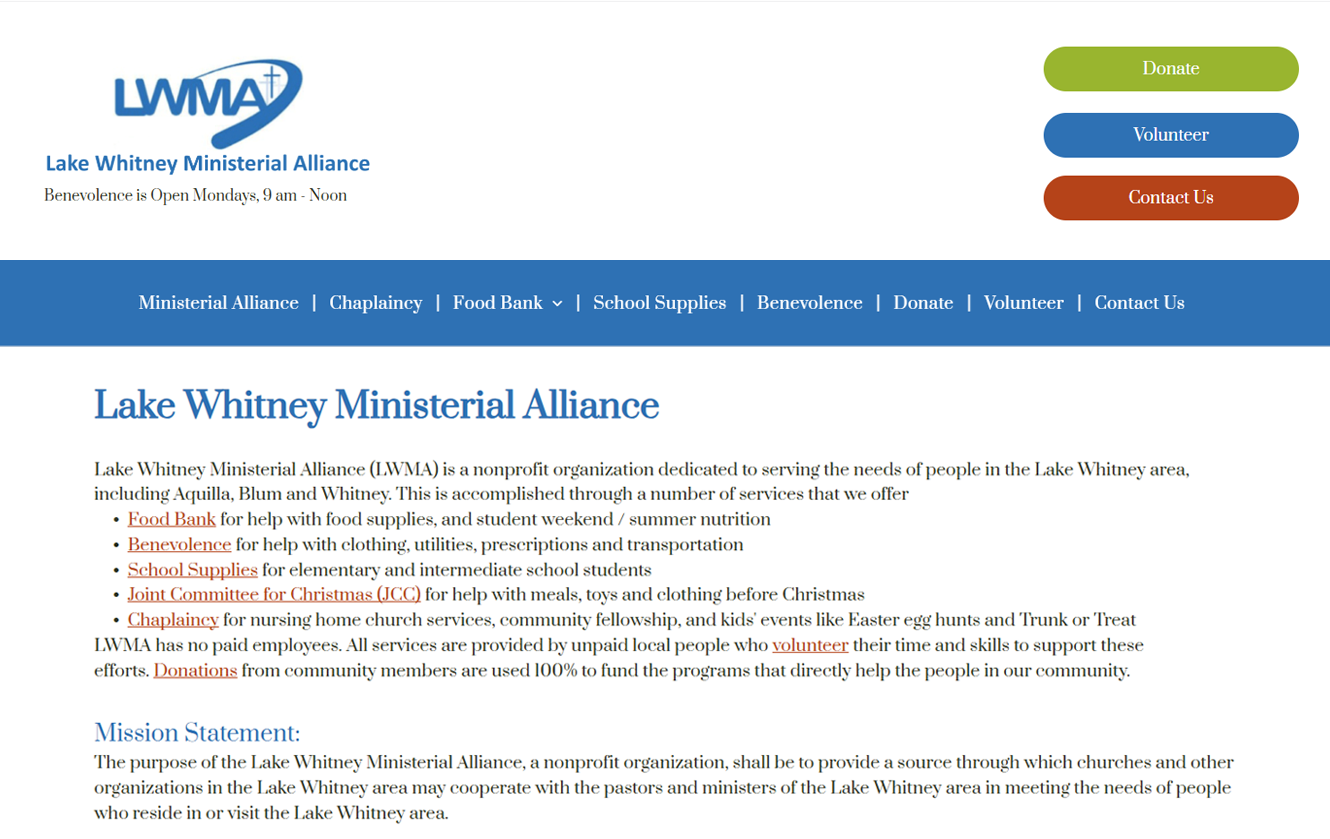
BEFORE — Ministerial Alliance Site
- Separate website structure
- No direct connection to Food Bank services
- Users had to navigate between separate systems
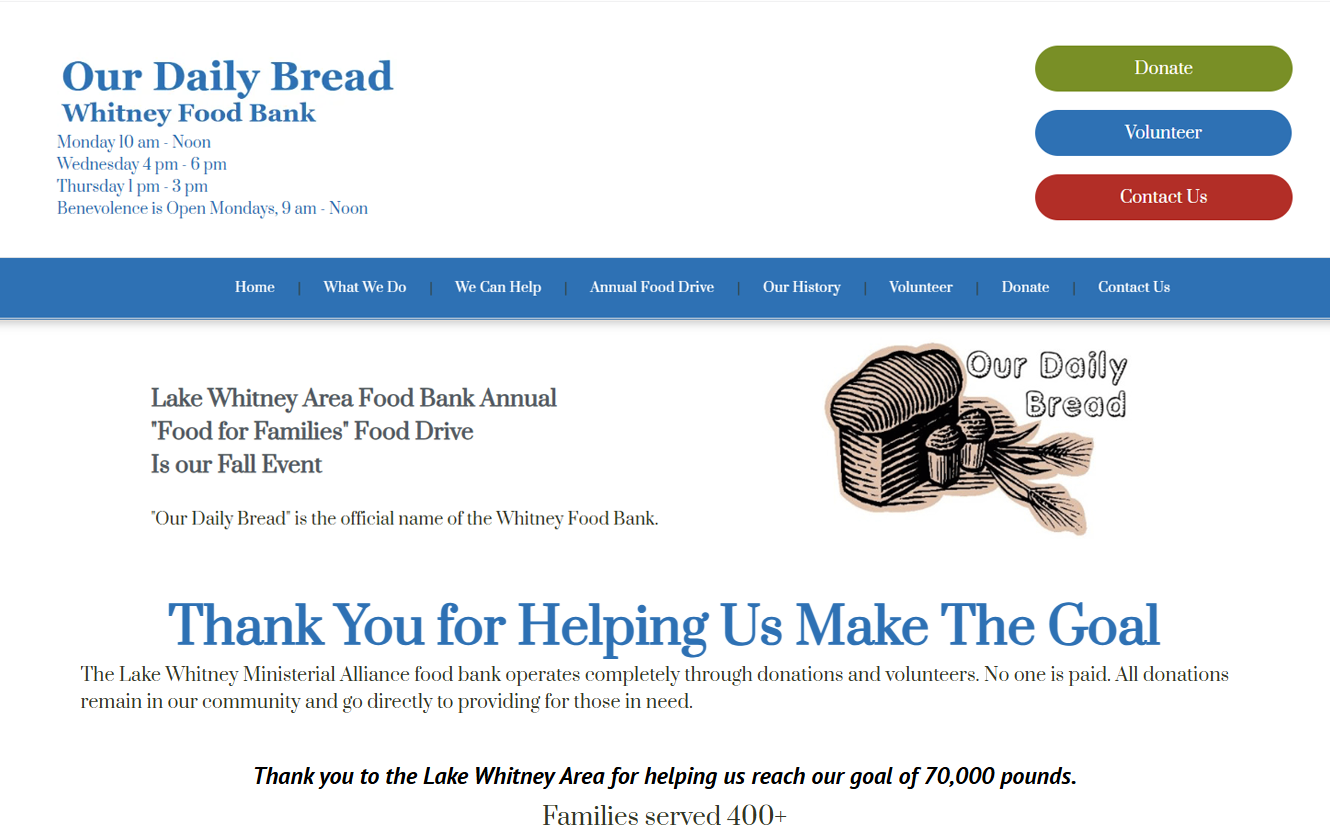
BEFORE — Food Bank Site
- Independent website and navigation
- Duplicate information across both organizations
- Limited visibility into related community resources
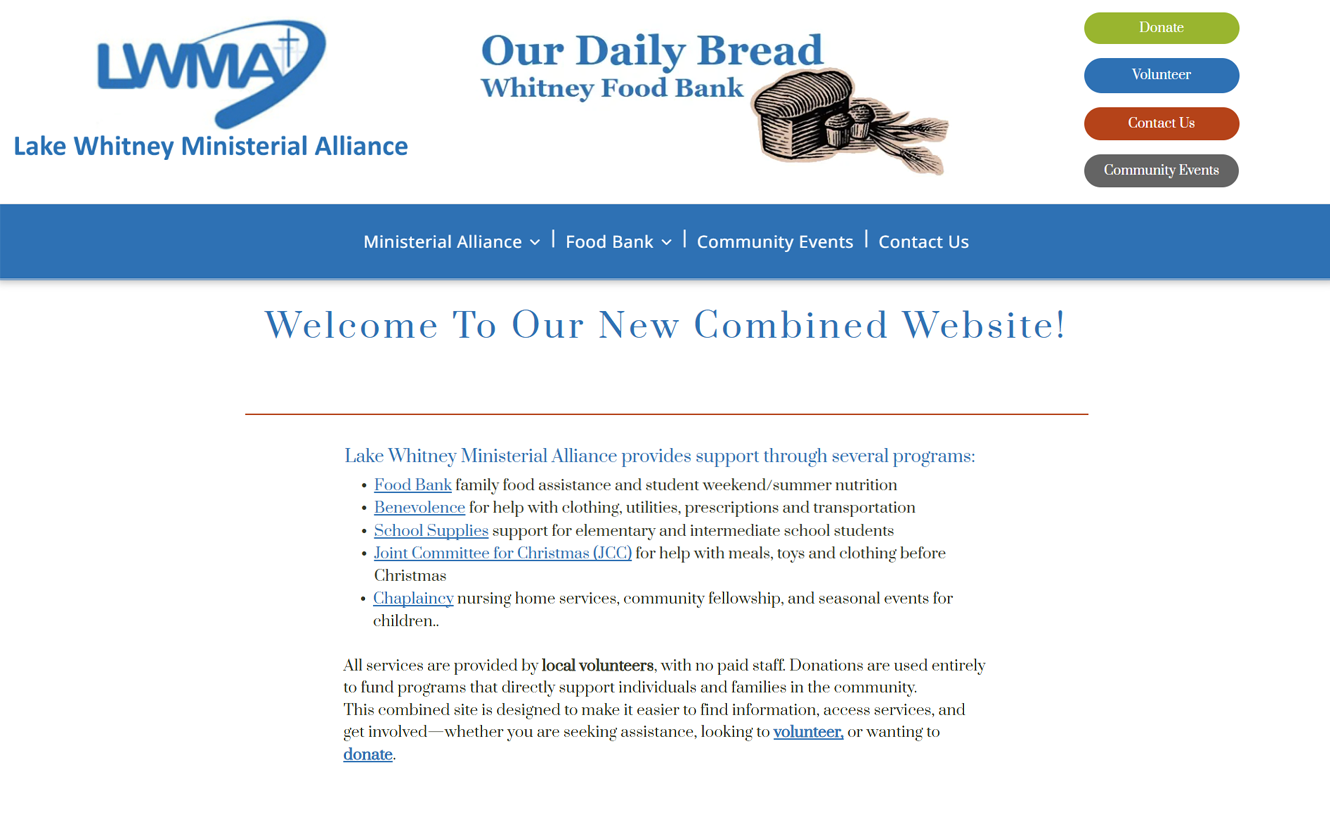
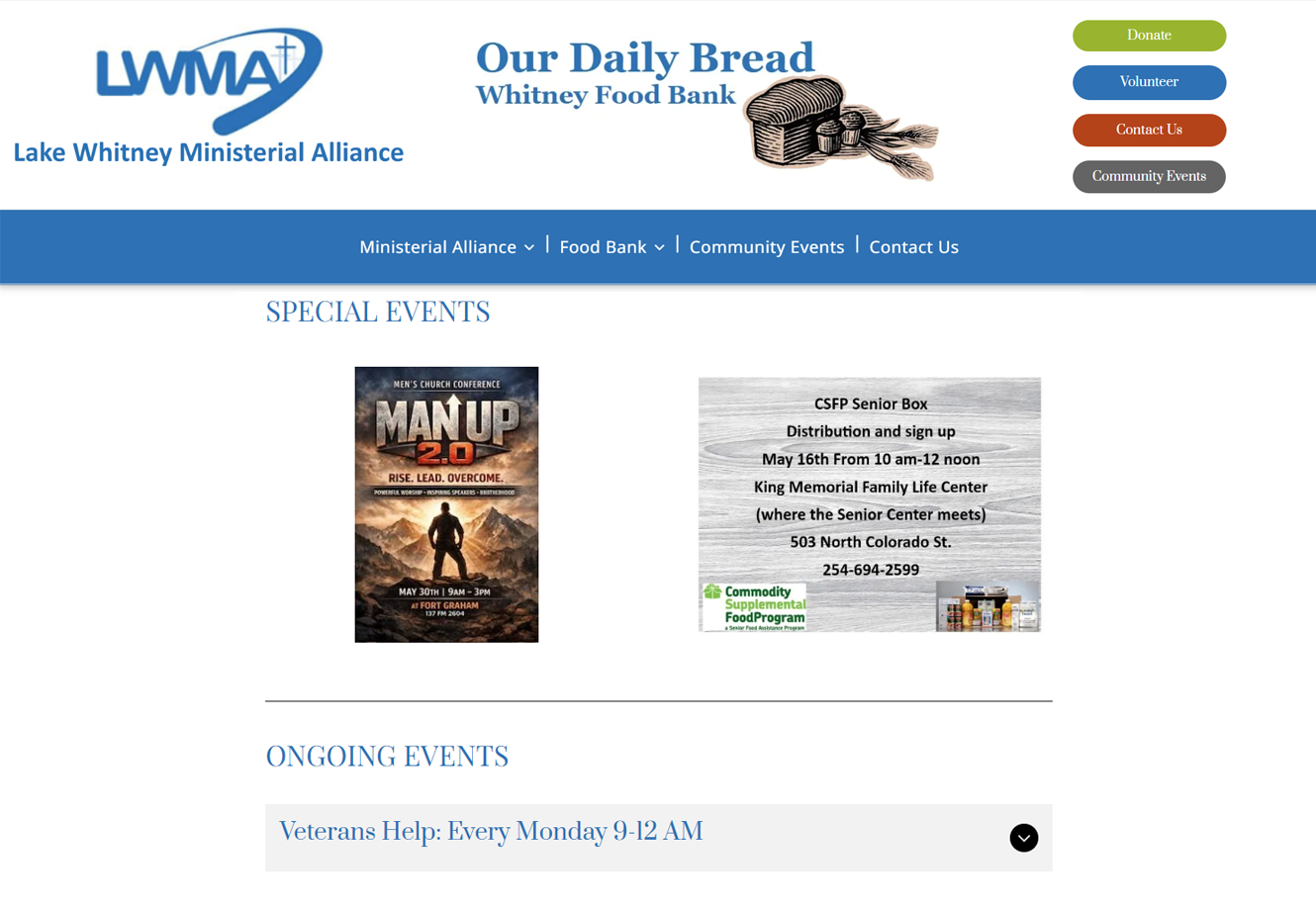
AFTER — Unified Website System
- One connected website structure
- Shared navigation across both organizations
- Reduced duplicate content and confusion
- Easier movement between related services and resources
Click on the image to visit the site
- Mapped content across both sites and identified duplication. Designed a unified structure with clearly defined sections for each organization under a shared navigation system.
- Introduced shared content areas and eliminated duplicated information.
- The system uses domain-based entry points and shared navigation.
- Users entering through the Ministerial Alliance domain land in that section
- Food Bank users are directed to /Whitney-Food-Bank
- Navigation allows movement between both without leaving the site
Project Improvements
- Reviewed and mapped content across both websites to identify overlap, duplicate information, and disconnected user pathways.
- Designed a unified content structure with clearly organized sections for both the Ministerial Alliance and Food Bank under one shared navigation system.
- Consolidated shared information into centralized content areas to improve consistency and reduce maintenance.
- Created domain-based entry points that guide users into the correct section while keeping both organizations connected within the same website experience.
- Improved navigation flow so users can move between community resources, food assistance information, volunteer opportunities, and organizational details without leaving the site.
- Built a scalable structure that supports future updates while maintaining clarity and usability across desktop and mobile devices.
SHARED CONTENT THAT DIDN’T EXIST BEFORE
Community Events Hub
The redesigned website introduced shared content areas that connected both organizations within a single system. One of the most important additions was a centralized Community Events page.
Previously, event information would have needed to be posted separately across two independent websites, increasing duplication, maintenance time, and the risk of outdated or inconsistent information.
The new structure created a single shared location for community events, allowing both organizations to contribute to and reference the same content while keeping navigation clear and consistent for users.
Benefits of the Shared Events System
- One centralized location for community events
- Reduced duplicate content across both organizations
- Easier maintenance and content updates
- Improved visibility for community programs and outreach
- Clear navigation between related services and events
Result
A connected content system that reflects how both organizations already operate together in the community while improving usability and long-term content management.